
At Sacred Journey Recovery, our addiction recovery programs for men are crafted to help you move beyond cyclical relapse patterns, manage intense emotional surges, and repair fractured relationships. Rather than only focusing on abstinence or “not using,” we help men develop mastery over emotional chaos, impulsive behaviors, and fragmented thinking, so they can live sober with confidence, agency, and connection. Our approach integrates evidence-based DBT skills, peer support in a men-only environment, wilderness and experiential therapy, and spiritual reflection, all tailored to the unique dynamics of male recovery.





DBT is a structured, skills-based psychotherapy originally developed by Marsha M. Linehan in the 1980s, eventually adapted for addiction and co-occurring disorders. At its core, Dialectical Behavior Therapy recognises that change and acceptance are not opposites, they are deeply interwoven. Clients learn to accept where they are and commit to the work of transformation.
In our men’s addiction recovery program, Dialectical Behavior Therapy (DBT) becomes a powerful, action-based approach to developing emotional mastery and resilience. It helps men recognize high-risk emotional and behavioral states before they escalate into relapse, providing tools to pause, assess, and choose a healthier response. Through DBT’s structured skill training, participants learn to tolerate distress rather than escape or numb it, fostering a greater capacity to handle discomfort without turning to substances. The process strengthens emotional regulation and reduces impulsivity, allowing men to respond thoughtfully instead of reacting out of habit. Over time, these skills extend beyond therapy sessions into everyday life, cultivating presence, self-awareness, and conscious choice through mindfulness practices that support long-term sobriety and grounded living.
Assessment & Emotional Baseline Mapping: We begin by mapping your emotional regulation profile, impulsivity patterns, relational triggers, and behavioral chain reactions. This intake phase identifies the high-risk zones where unregulated feelings or impulsive responses have pushed you toward substance use.
Chain-Analysis & Skill Linking: You will work in individual and group sessions to trace the “chain reaction” from a trigger (e.g., anger, shame, craving, relational conflict) → immediate thoughts/emotions → urge → behavior (use or avoidance). This chain-analysis method is central to DBT’s adaptation for substance use.
In these sessions, you’ll practise linking the moment of impulse to a pause, observe the cascade, and choose a skill-response instead of a reaction.
Core Skills Modules
We deploy the four primary DBT modules, tailored for men in recovery:
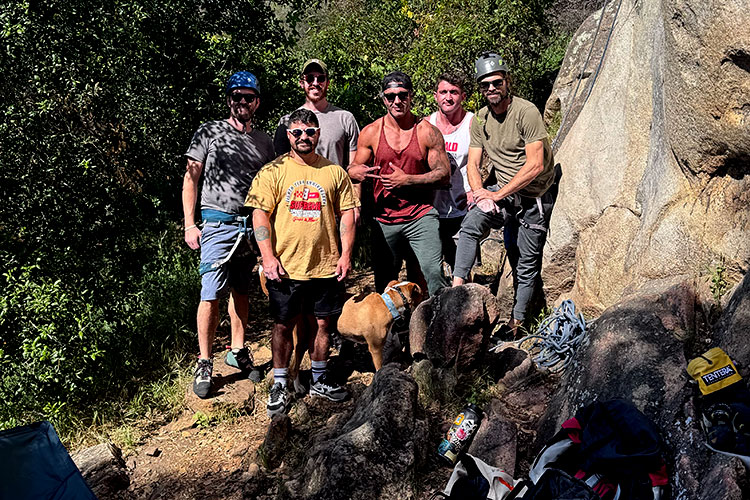
Experiential Integration & Real-World Practice: At Sacred Journey, we take you out into nature, into challenge tasks, into wilderness-based and adventure-based contexts. You practise distress tolerance, emotional regulation, and peer relational effectiveness in rugged, real-life environments. This contextualizes skills into your lived male recovery experience.
Relapse Prevention & Life-long Skill Anchoring: We build a relapse-prevention blueprint that ties triggers, emotion/regulation patterns, peer accountability, and everyday rituals together.
Dialectical Behavior Therapy (DBT) has been extensively validated through empirical research for its effectiveness in treating addiction and co-occurring mental health disorders. Studies show that DBT not only reduces substance-use symptoms but also addresses the underlying emotional and behavioral drivers of addiction. A comprehensive meta-analysis found that individuals participating in DBT programs experienced significantly greater reductions in substance use compared to those in other therapeutic approaches. Furthermore, a 2023 study confirmed that even standalone DBT skills training can be highly effective for individuals with alcohol use disorder and other substance-related conditions, demonstrating DBT’s broad applicability and measurable impact in sustaining long-term sobriety.

Because DBT addresses core vulnerabilities, emotion dysregulation, impulsivity, avoidance/escape patterns, and relational instability, it applies broadly across use patterns and co-occurring issues. At Sacred Journey, we customise DBT work for men dealing with:
Stimulant Addiction: Targeting patterns of urgency, impulsivity, and high-risk, sensation-seeking behavior often linked to stimulant use.